Futsal vs outdoor soccer: Key differences, benefits, and which game is right for you
Key Takeaways
Futsal and outdoor soccer share the same basic aim, but the smaller game asks us to solve problems faster and in less space.
- Futsal is played on a compact, hard court with five players per side.
- Outdoor soccer gives us more room for running, passing range, and positional structure.
- Futsal places repeated pressure on first touch, close control, and quick decisions.
- Outdoor soccer develops wider movement, longer passes, and awareness across a large field.
- We can move between both formats by adjusting our speed, spacing, touch, and footwear.
What separates futsal from outdoor soccer
The clearest difference in futsal vs outdoor soccer is the environment around the player. One version compresses the game into a small court, while the other spreads decisions across a much larger field. That changes how often we receive the ball, how quickly opponents arrive, and how much ground we cover without it. Neither format is simply an easier or harder version; each rewards a different set of habits.
Court and field dimensions
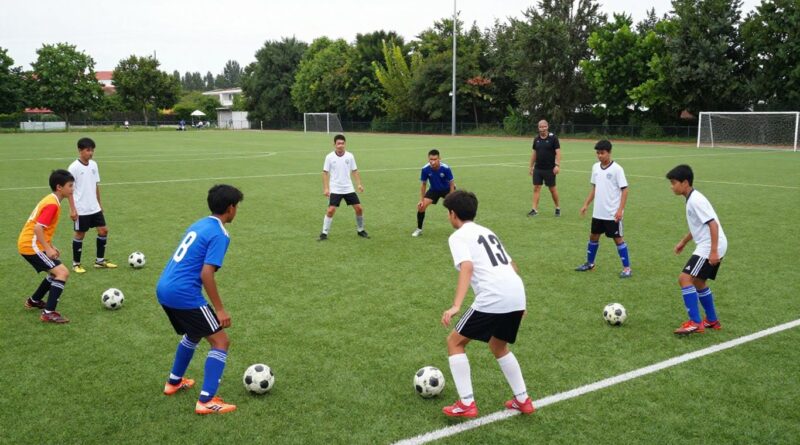
A futsal court is much smaller than a full-size outdoor soccer field, with touchlines close to the action and no large outfield space behind the ball. Outdoor soccer gives players room to stretch the opposition, carry the ball into open areas, and make longer supporting runs. In futsal, a player can be involved in an attack and then defending a dangerous pass seconds later.
The reduced space also changes our scanning habits. We need to check shoulders before receiving, understand where the next passing option is, and use our body to protect the ball. Outdoors, we still scan, but we often have more time to open up or take a first touch into space.
Playing surface and ball design
Futsal is generally played on a hard, flat surface with a smaller, low-bounce ball. That ball tends to stay nearer the floor, making it easier to practise controlled passes, sole stops, and quick changes of direction. Outdoor soccer is usually played on grass or an artificial surface with a standard ball that travels further and can bounce more noticeably.
Surface and ball together influence technique. On a court, a misplaced touch can put the ball immediately within an opponent’s reach. On a field, the same error may still be recoverable if there is space to chase or a teammate can cover.
Team size and match format
Futsal is commonly played with five players per side, including a goalkeeper, while outdoor soccer is often played with larger teams on a much bigger pitch. Futsal matches use shorter periods and a compact playing area, so every player tends to have a clear role in both attack and defence. Outdoor soccer allows more specialised positions and longer phases away from the ball.
For junior players, this difference matters. Futsal can give us frequent involvement, while outdoor soccer teaches us how to contribute when the ball is on the opposite side of the field. A useful development plan can include both experiences rather than treating them as competing choices.
Substitutions, restarts, and game flow
Futsal usually has rolling substitutions, which keeps the intensity high and allows players to recover in short spells. Restarts are also taken from the touchline rather than by throwing the ball in, and the ball is often back in play quickly. Outdoor soccer has more open pauses, with substitutions and restarts shaped by the match rules and competition level.
The result is a different rhythm. In futsal, we must be ready to enter and contribute almost immediately. Outdoors, we may need to manage longer periods of movement, wait for the right moment to press, and stay mentally engaged when the ball is far away.
How the rules change the way you play
Rules do more than organise a match; they quietly shape our choices. A low-bounce ball encourages certain touches, the absence of offside changes attacking positions, and limits around fouls alter how aggressively we defend. When we understand those details, the game feels less rushed because we can predict what options are likely to appear. The rules become part of our tactical toolkit.
Ball control in tight spaces
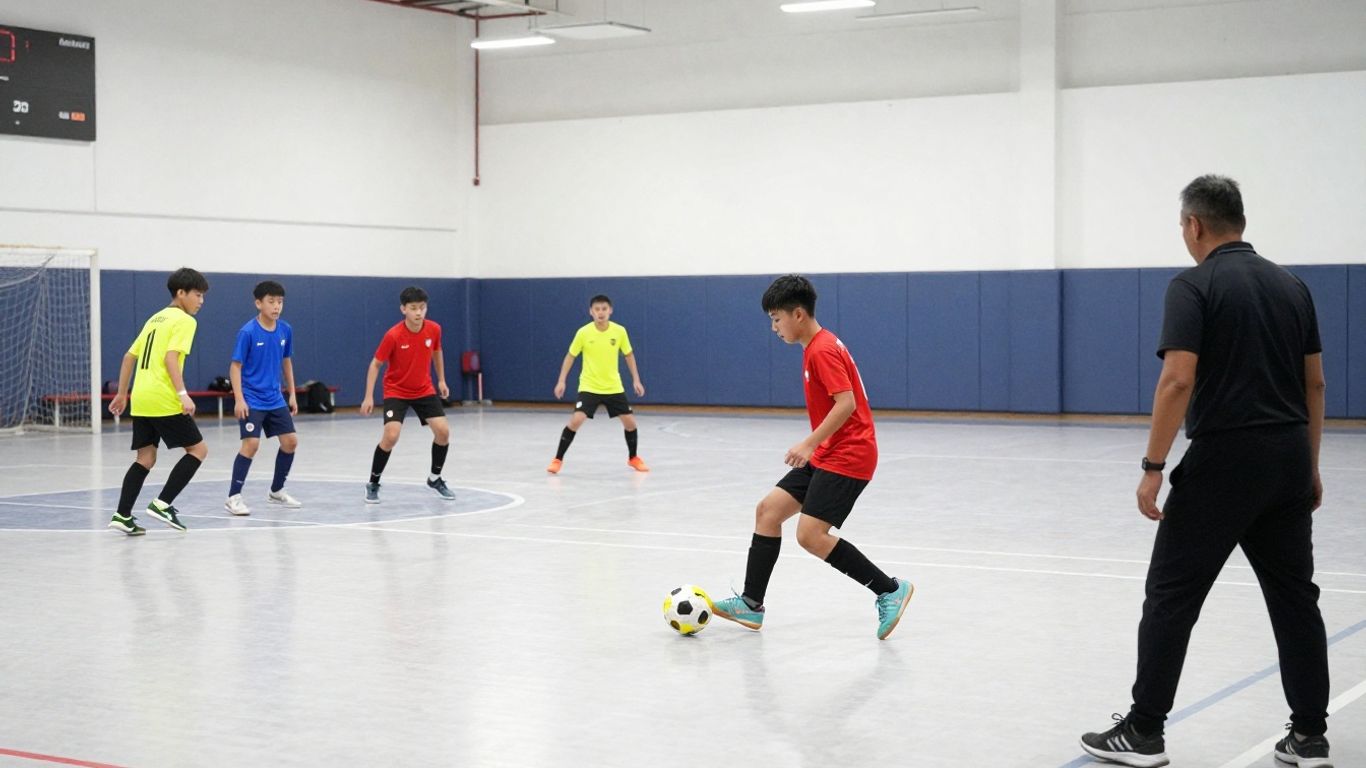
In futsal, receiving the ball often means dealing with immediate pressure from one or two opponents. We may use the sole to stop or roll the ball, the inside of the foot to move it across the body, or a quick pass to escape before the next challenge arrives. A first touch that travels only a little too far can end the attack.
That is why we should practise receiving on different feet and in different body positions. The aim is not to perform tricks for their own sake, but to keep the ball playable while seeing the next action. Outdoor soccer rewards these skills too, although the larger space may give us more time to recover from an imperfect touch.
Offside rules and attacking movement
Outdoor soccer uses offside rules that influence when and where attackers can move beyond the defensive line. We must time runs carefully, stay connected to the ball carrier, and recognise when to hold our position. Futsal does not use the same offside restriction, so attackers can occupy advanced spaces more freely, but they still need to move intelligently to create passing lanes.
Without offside, a futsal attack can become crowded if players all push forward. Good movement still involves checking away, rotating positions, and opening a lane for a teammate. The rule removes one restriction, not the need for coordinated movement.
Fouls, discipline, and set pieces
The two games manage contact and accumulated fouls differently, so our defending habits need to be disciplined. In futsal, repeated team fouls can lead to a dangerous set-piece situation, which makes reckless challenges especially costly. Outdoor soccer gives defenders more space to delay an attack, but poorly timed contact can still concede a free kick, penalty, or card.
We should defend with our feet, angle the attacker away from danger, and communicate before stepping in. A calm defender does not need to win every ball immediately; often the better decision is to delay the attack until support arrives.
Goalkeeper restrictions and distribution
Futsal goalkeepers operate in a much smaller defensive area and often become an extra passing option during build-up. Their decisions must be quick because a short pass can be pressured immediately, while a save may be followed by another shot within moments. Outdoor goalkeepers generally have more ground to cover and may use longer distribution to change the point of attack.
For outfield players, this means we must offer safe angles when playing out from the back. We should not hide behind opponents and expect the goalkeeper to solve the problem alone. Clear communication and sensible spacing make both formats easier to play.
Comparing the skills each version develops
Both games develop footballers, but the emphasis is not identical. Futsal places us in repeated close-range decisions, while outdoor soccer asks us to connect those decisions across bigger distances and longer phases. We should judge progress by the quality of our choices, not only by goals or successful dribbles. Good technique serves decisions rather than replacing them.
Passing speed and first-touch technique
Futsal rewards crisp passes over short distances and a first touch that prepares the next action. Because pressure arrives quickly, we often need to pass with one or two touches, then move to provide another option. Outdoor soccer also values clean passing, but the larger field adds driven passes, switches of play, clipped balls, and longer combinations.
A player moving outdoors after regular futsal may have excellent close passing but need time to judge greater distances. Conversely, a player moving into futsal may need to make shorter passes earlier, before an opponent closes the lane.
Dribbling, shielding, and one-on-one play
Futsal creates many moments where we must protect the ball with our body or beat an opponent in a narrow channel. Small changes of pace, a well-timed sole roll, and the ability to turn away from pressure are valuable. Outdoor soccer provides more room for a longer carry, a sprint past a defender, or a one-on-one duel near the sideline.
The best dribblers in either format do not attack every opponent. They recognise whether the next action should be a carry, a shield, a pass, or a reset. That judgement is more useful than collecting moves without knowing when to use them.
Shooting power versus finishing accuracy
Outdoor soccer can reward striking power because shots may come from further out and the goal is approached through larger spaces. Futsal usually brings shooting opportunities closer to goal, often after a quick combination or a rebound. Accuracy, disguise, and a fast release can matter more than a full swing.
We should practise finishing from the situations the game actually creates. In futsal, that may include toe-pokes, near-post attempts, rebounds, and shots taken before the goalkeeper sets. Outdoors, we may have more time to open the body, choose a corner, or strike from distance.
Decision-making under pressure
Futsal repeatedly asks us to decide with limited time and limited space. We must recognise pressure, identify support, and choose whether to play forward, protect possession, or change the point of attack. Outdoor soccer adds decisions about when to slow down, when to run beyond, and how to use the width and depth of the field.
A simple training game can make these differences clear. If we reduce space and time, players learn to scan and release the ball quickly. If we expand the area, they learn to carry, spread out, and recognise longer passing options.
The physical demands of futsal and outdoor soccer
The physical challenge depends less on which game is universally harder and more on how effort is distributed. Futsal involves frequent accelerations, stops, turns, and short recoveries. Outdoor soccer usually requires longer running patterns, repeated efforts over greater distances, and patience between high-intensity actions. We should prepare for the specific movement demands rather than copy a generic session from one format to the other.
Short bursts and repeated sprints
Futsal players are constantly changing speed over a small area. A few quick steps may create separation, followed by a sharp defensive recovery or a sprint to the far post. Because the court is compact, there may be little time to walk out of a phase before the next action begins.
This makes repeated short efforts central to the game. Training can include brief accelerations, quick changes of direction, and technical actions immediately after movement. The ball should remain part of the work whenever possible, because futsal fitness is closely connected to decision-making.
Endurance across a full-size field
Outdoor soccer asks us to cover more ground and manage energy over a longer match. We may sprint to support an attack, jog into a defensive position, then make another high-speed run several minutes later. Players must understand when to conserve effort and when a decisive movement is worth the cost.
Positional awareness helps us run efficiently. A player who arrives early in the right space may cover less ground than one who is constantly chasing the play. Endurance is therefore partly physical and partly tactical.
Contact, balance, and injury considerations
Both formats require balance when shielding, turning, landing, and challenging for the ball. Futsal’s hard surface can make awkward falls feel more noticeable, while outdoor fields bring their own changes through grass, artificial turf, mud, or uneven footing. Contact should be managed according to the rules and the age and experience of the players.
We should build sessions progressively, give players time to warm up through football movements, and take persistent pain or unusual symptoms seriously by seeking appropriate professional guidance. Coaches can reduce avoidable risk through sensible spacing, clear rules, and suitable equipment without pretending that every injury can be prevented.
How goalkeepers face different challenges
A futsal goalkeeper may face close-range shots, deflections, and rapid passes across the face of goal. Quick reactions and an ability to set the body early are vital. Outdoor goalkeepers cover a larger goal and may need to judge crosses, through balls, one-on-ones, and shots taken from further away.
The goalkeeper’s distribution also changes. In futsal, a short release can begin an attack immediately, while outdoor soccer may reward a longer throw or kick into space. In both versions, the goalkeeper needs to read the game rather than wait passively for a shot.
Choosing the right format for your goals
The best choice depends on what we want to practise, how we enjoy playing, and what opportunities are available locally. Futsal may suit players who want constant involvement and repeated touches. Outdoor soccer may suit those who enjoy space, longer phases, and the challenge of holding a position within a larger team structure. We can also use one format to improve the other.
Futsal for technical development
Futsal is a useful setting for close control, quick passing, shielding, and receiving under pressure. The limited space means players are rarely spectators for long, so they must keep checking their surroundings and offering support. This can make technical lessons feel immediate and practical.
It is particularly valuable when we want players to become comfortable with the ball near opponents. The game does not remove the need for strength, speed, or tactical awareness, but it places technical execution at the centre of many moments.
Outdoor soccer for positional awareness
Outdoor soccer teaches us how to use width, depth, and distance between units. Players learn that a good position may be several metres from the ball and that a run can create space even when no pass arrives. We also learn to defend larger areas and recognise when teammates need cover.
These lessons are important for players progressing into more structured team football. They encourage patience, communication, and an understanding of how individual movement affects the whole shape.
Picking a format for fitness and enjoyment
For fitness, futsal offers repeated bursts and a fast rhythm, while outdoor soccer provides longer running patterns and varied intensity. For enjoyment, the deciding factor may simply be whether we prefer constant involvement or more open play. A player who looks forward to training is more likely to attend regularly and keep improving.
We can compare the formats by asking a few practical questions:
- Do we enjoy having the ball frequently?
- Do we prefer short, intense efforts or longer runs?
- Do we like close combinations or open-field movement?
- Which local sessions fit our schedule and experience?
These answers do not need to produce a permanent choice. Seasonal changes, school commitments, and club opportunities can all affect what works best. Trying both formats may give us a clearer answer than guessing from the sidelines.
Matching the game to your age and experience
Younger or newer players often benefit from formats that give them regular contact with the ball and simple chances to make decisions. As players develop, outdoor soccer can introduce more complex positional demands, while futsal can continue to sharpen technique under pressure. The right challenge should stretch us without making every action feel rushed or confusing.
Coaches and families should focus on enjoyment, safe participation, and steady learning. A player’s preferred format may change as confidence grows, and that is a normal part of development.
How to transition between futsal and outdoor soccer
Moving between formats is rewarding, but the first sessions can feel strangely fast or slow. A futsal player may overrun the ball outdoors, while an outdoor player may hold it too long on a court. We can make the adjustment easier by changing one habit at a time and giving ourselves time to read the new spaces. The skills transfer best when we adapt them rather than copy them exactly.
Adapting from a small court to a large field
When moving outdoors, we need to look further before receiving and allow our first touch to travel into available space. The ball may take longer to arrive, and a teammate who looks close on a futsal court may be much further away on a field. We should resist the urge to force a short combination when a longer pass is the safer option.
Defensively, we also need to protect more space. A quick futsal press can leave a large gap outdoors if teammates are not close enough to support it, so pressing must be coordinated with the team’s overall shape.
Adjusting passing range and movement
Outdoor soccer demands a wider passing vocabulary. We may need to play across the field, behind a defensive line, into a runner’s path, or back to a teammate who is supporting from distance. Movement after passing remains essential, but the next useful position may involve a longer run rather than a short supporting angle.
Futsal players can improve this transition by practising passes with different weights and by scanning before the ball arrives. Outdoor players entering futsal should shorten the distance between actions and move again sooner after releasing the ball.
Applying futsal skills outdoors
Futsal skills transfer well when they are used with better timing. Close control can help us escape a crowded midfield, a quick sole stop can change the direction of an attack, and a sharp one-two can break a line. We should not try to dribble through every open-field situation simply because the technique worked on a court.
The bigger field rewards choosing the right moment. A player may use a futsal-style touch to beat the first opponent, then release the ball early because the next defender is arriving from a different angle.
Preparing for different footwear and surfaces
Footwear should match the playing surface and the competition rules. Futsal commonly uses flat indoor footwear designed for a hard court, while outdoor soccer requires boots suited to the grass or artificial surface. The feel underfoot changes balance, traction, and the way we stop or turn.
We should allow time to adjust rather than arrive expecting identical movement. Short technical sessions, controlled changes of direction, and sensible checking of the surface can help us build confidence before a full match.
Frequently Asked Questions
Is futsal the same as indoor soccer?
Not always. Futsal has its own rules, typically uses five players per side, and is played on a hard court with a low-bounce ball. Other indoor versions may use different team sizes, surfaces, boundaries, and match rules.
Which game is better for improving ball control?
Futsal provides frequent close-range touches and immediate pressure, making it a useful environment for ball control. Outdoor soccer also develops control, especially when players must manage longer passes, changing bounces, and greater space.
Can futsal make us better outdoor soccer players?
It can support outdoor development by improving close control, quick passing, scanning, and decisions under pressure. We still need outdoor sessions to learn the distances, running patterns, and positional demands of a full-size field.
Is futsal more physically demanding than outdoor soccer?
The demands are different. Futsal involves repeated short bursts, turns, and quick recoveries, while outdoor soccer usually requires more total ground coverage and longer running patterns. Intensity also depends on age, level, match length, and playing role.
Do futsal players use different shoes?
Usually, yes. Futsal shoes are generally designed for grip and movement on a flat indoor court, while outdoor footwear is selected for the particular grass or artificial surface. We should follow venue and competition requirements.
Does outdoor soccer have offside while futsal does not?
Outdoor soccer uses offside rules that affect attacking runs and positioning. Futsal does not use the same offside restriction, but attackers still need intelligent movement to avoid crowding the court and to create passing options.
Which format should a beginner choose?
A beginner can start with either format, depending on local access and personal enjoyment. Futsal offers frequent involvement in a compact space, while outdoor soccer introduces larger-team movement and more room to explore. A combination can be especially useful when available.