Futsal vs outdoor soccer: Key differences, benefits, and how to choose
Key Takeaways
Futsal and outdoor soccer share the same basic aim, but they ask different questions of players. We can use the contrast to choose a better fit and build a more rounded development pathway.
- Futsal is a compact, quick game played on a hard court with five players per side.
- Outdoor soccer offers more space, longer distances, and greater variation in positioning.
- Futsal rewards close control, rapid decisions, and short passing under pressure.
- Outdoor soccer develops scanning, stamina, movement into space, and defensive shape.
- Playing both formats can give young players a broader and more adaptable skill set.
What futsal and outdoor soccer are
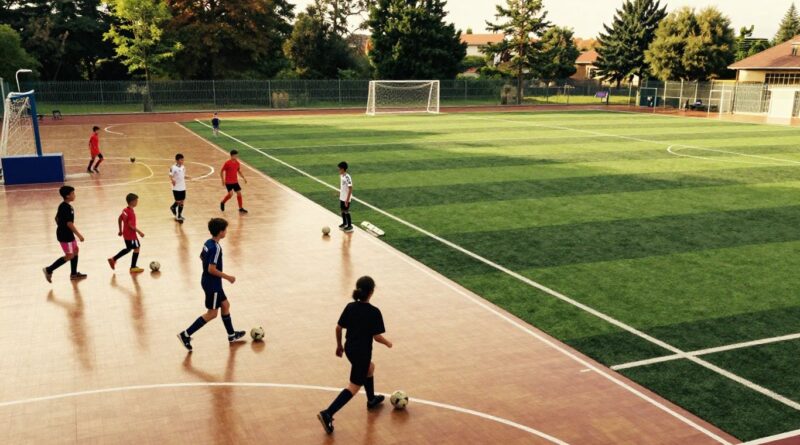
When we compare futsal vs outdoor, we are comparing two related forms of football rather than two unrelated sports. Both involve creating space, defending as a team, and moving the ball towards a goal. The setting changes the tempo, the distances, and the choices players must make.
How each version of the game is played
Futsal is generally played on a marked hard court, with two teams of five including a goalkeeper. The smaller area keeps players involved and brings opponents close together, so receiving, turning, passing, and supporting must happen quickly. Outdoor soccer is normally played on a much larger grass or artificial surface, where players have more time in some moments but must cover greater distances.
The objective remains familiar in both formats: score more goals than the other team. What changes is the rhythm. Futsal tends to produce frequent transitions, while outdoor soccer can move between short combinations, longer passes, and periods of patient possession.
Typical team sizes and match formats
A standard futsal side has five players on the court, while outdoor soccer is commonly played with larger teams. Junior outdoor formats may use smaller-sided games so the pitch, goals, and number of players suit the age group. Local competitions can also vary in match length and substitution arrangements.
For young players, the quality of the format matters more than simply choosing the biggest available game. A well-organised small-sided match may give us more meaningful decisions than a crowded field where a player rarely touches the ball.
Indoor and outdoor playing environments
Futsal is often associated with indoor sport halls, although suitable courts can also be outdoors. Its boundaries are marked by lines rather than surrounding walls, so the ball goes out when it crosses the touchline or goal line. Outdoor soccer is usually played on grass or artificial turf, with conditions shaped by the field, wind, sunlight, and weather.
These settings influence how the ball travels and how comfortable players feel. A court may offer a predictable surface but limited space; a field may offer freedom but require players to judge changing distances and conditions.
Why players enjoy both styles
Futsal gives us constant involvement and quick chances to influence the game. Outdoor soccer gives us the satisfaction of finding space, building attacks over distance, and working within a larger team shape. Players who enjoy close battles may prefer the court, while those who like running, crossing, and stretching a defence may prefer the field.
Neither choice has to be permanent. Many juniors enjoy the change of pace, and coaches can use each format to keep training varied without losing the shared foundations of football.
How the rules differ
The core laws are recognisable, but futsal changes several details to suit a smaller playing area. Restarts, substitutions, the ball, and the treatment of fouls all affect the way a match develops. We should check the local competition rules because junior and community formats can include sensible variations.
Ball size, bounce, and movement
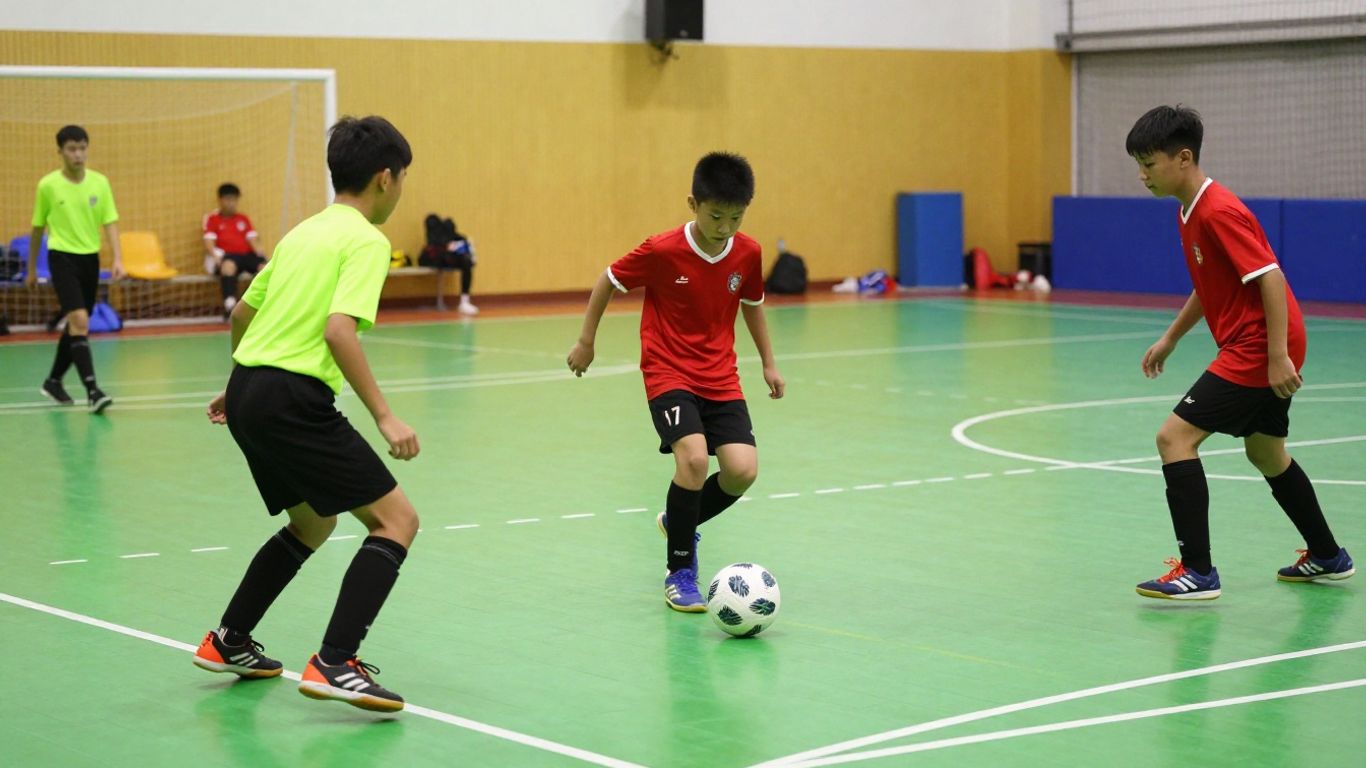
A futsal ball is generally smaller and designed to bounce less than a standard outdoor soccer ball. That makes it easier to keep the ball on the court and encourages players to control passes with their feet. The ball still moves quickly, so a poor first touch can be punished immediately.
An outdoor ball is built for a larger surface and can travel much farther. Players therefore learn to judge flight, pace, and distance in a different way. We should not expect a touch that works on a field to feel identical on a court.
Touchlines, restarts, and substitutions
Futsal uses touchlines and goal lines, with kick-ins commonly used when the ball leaves the court. The restart is quick and the limited space means players must offer passing options straight away. Substitutions are also typically more fluid than in many outdoor matches, allowing the intensity to remain high.
Outdoor soccer uses throw-ins for most touchline restarts, and substitution rules depend on the competition. The larger field gives teams more time to organise, but a slow restart can still surrender territory or allow the opposition to reset.
Fouls, contact, and goalkeeper rules
Both formats permit normal football contact within the laws, but reckless or careless challenges remain penalised. In futsal, the compact court means mistimed contact can affect the match quickly, and competitions may track team fouls across a half. Goalkeepers also face different practical demands: they must distribute accurately in tight spaces and react to shots from close range.
Outdoor goalkeepers cover a larger goal area and may be asked to deal with crosses, through balls, and shots from greater distances. In either format, we should teach players to defend with their feet, body position, and anticipation rather than relying on late challenges.
Match length and game flow
Futsal matches commonly use two periods of 20 minutes of playing time, while outdoor match lengths vary by age group and competition. The clock, substitutions, and stoppages can differ between leagues, so families should confirm the details before registering.
The shorter court creates a fast cycle of attack and defence. Outdoor matches often contain more changes in tempo, with sustained possession followed by a sudden run into space. Learning to recognise those moments is part of becoming a thoughtful player.
Comparing the playing surfaces and equipment
The surface is not a minor detail; it changes how players plant, turn, slide, and receive the ball. Equipment should suit the venue rather than simply look like a smaller version of outdoor gear. We can make better choices by considering traction, comfort, safety, and the rules of the facility.
Futsal courts versus outdoor fields
Futsal courts are usually firm, flat, and relatively compact, often with a timber or synthetic sports surface. Outdoor fields may be natural grass or artificial turf, and their condition can change after rain, heat, or heavy use. Those differences affect ball speed and the amount of force needed for a pass.
Players moving between formats should give themselves time to adjust. A familiar passing action may send the ball too far on a court, while a gentle court pass may not travel through a large field.
Footwear and traction requirements
Indoor futsal generally calls for flat, non-marking shoes designed for grip on a hard court. Outdoor footwear depends on the surface and local rules, with different sole patterns suited to grass or artificial turf. We should never assume that one pair is safe and effective everywhere.
The best choice is usually the one that provides steady traction without making turning awkward. Players also need room for natural movement, because tight or poorly fitted shoes can distract them from the game.
Goals, markings, and boundary areas
Futsal goals are smaller than the goals used on a full outdoor field, and the court markings define a compact playing area. The penalty area, halfway line, touchlines, and goal lines all have immediate tactical meaning because there is little spare space around them.
Outdoor fields use larger goals and broader markings, often with additional areas for corners, penalty decisions, and goalkeeper positioning. The dimensions may change for junior football, so players should learn the layout at their own venue rather than memorise one universal picture.
Weather and facility considerations
Indoor facilities can provide a more consistent playing environment, particularly when rain or extreme heat would affect an outdoor session. They may still have limits around booking times, court availability, noise, and shared use. Outdoor football offers more room but can be cancelled or altered when the surface becomes unsafe.
Before joining a programme, we can ask about the surface, footwear rules, lighting, changing areas, and wet-weather policy. A practical venue is one that helps players attend regularly and feel comfortable.
The skills each format develops
Every game develops skills, but the environment decides which skills appear most often. Futsal puts players near the ball and near opponents, while outdoor soccer tests their ability to use space over longer distances. We should treat those differences as useful training information, not as a ranking of one format over the other.
Close control and quick decision-making in futsal
Futsal gives players frequent opportunities to receive under pressure, protect the ball, and choose an action in a small window. A clean first touch matters because the next defender may be only a step away. Players also learn to scan before receiving so they already know where the next pass might be.
This pressure can make simple actions more demanding. A short pass, a sole roll, or a change of direction must be timed well. Fast decisions matter because hesitation can close the only available lane.
Passing, movement, and combination play
With limited space, futsal players need to create passing angles rather than stand behind a defender. A pass often works because a teammate moves at the right moment, offers support, or takes an opponent away. Wall passes, rotations, and quick third-player movements can all develop a stronger sense of connection.
Outdoor soccer uses the same principles across larger distances. The difference is that players may have to recognise the passing angle earlier and travel farther to support the ball.
Space, endurance, and positioning outdoors
Outdoor soccer teaches players to look beyond the immediate contest. They must judge when to stay wide, when to run behind a defender, and when to recover into a team shape. Repeated movement over a larger field also develops the ability to manage effort across a longer match.
Endurance is not only about running continuously. Good positioning can reduce unnecessary running, help a team defend compactly, and create better options when possession changes. We want players to understand why they move, not just to move more.
How skills transfer between formats
The transfer between futsal and outdoor soccer is strongest when players understand the purpose behind a skill. Close control can help a player escape pressure outdoors, while outdoor scanning can help a futsal player find a pass before the court becomes crowded.
The transfer is not automatic. Players need to adjust their touch, speed, positioning, and expectations each time they change venue. Coaches can support that process by explaining what stays the same and what must change.
The benefits and challenges of each game
Choosing a format is often a question of fit rather than superiority. Futsal can provide concentrated technical work, while outdoor soccer develops decisions across a wider landscape. Both also bring challenges, especially when a player is new to the pace or physical demands.
Why futsal can improve technical ability
The compact court encourages players to stay engaged. They receive more situations that involve controlling, passing, turning, shielding, and reacting to a loose ball. Because pressure arrives quickly, players learn to use their body and their first touch with greater care.
Futsal can also make training feel lively. Players are close to the action, and a small mistake is followed by another opportunity to respond. That cycle can build confidence when the environment is supportive rather than overly focused on winning.
What outdoor soccer teaches about space and stamina
Outdoor soccer gives players room to understand width, depth, cover, and balance. They learn that a useful run may happen away from the ball and that a defender can help the team simply by holding a good position. The bigger field also asks players to manage energy and concentration.
These lessons are valuable for all positions. A goalkeeper reads the space behind the defence, a defender protects depth, and an attacker chooses when to stretch the opposition. Each role contributes to the shape of the whole team.
Common challenges for new futsal players
Players arriving from outdoor soccer may initially take touches that are too large or look for space that is not available. They may also wait for the ball instead of moving immediately after a pass. The quick restarts and constant transitions can feel tiring, even when the match is played on a smaller surface.
A few habits help us settle into the format:
- Scan before the ball arrives.
- Use the sole and inside of the foot to control at close range.
- Move again after passing rather than watching the play.
- Defend the passing lane as well as the player.
These habits make the court feel less rushed. With repetition, players begin to see that the lack of space is a prompt to prepare earlier, not a reason to panic.
Common challenges for outdoor players switching formats
Players moving from futsal to outdoor soccer may expect every teammate to be close enough for a short pass. They can also overrun the ball, chase play too eagerly, or forget to check the space behind them. The larger field rewards patience and wider awareness.
We can ease the change by starting with simple positional tasks. Ask players to hold width, check their shoulder, and recover at a controlled pace. Once those habits become familiar, the bigger field offers more freedom rather than simply more running.
How to choose between futsal and outdoor soccer
The right option depends on the player, the programme, and the reason we are taking part. Age, confidence, access, cost, competition level, and enjoyment all matter. A thoughtful choice supports regular attendance, because development comes from consistent involvement rather than from a single ideal session.
Choosing based on age, goals, and experience
Younger players often benefit from formats that keep them involved and let them experiment. Futsal may suit a player who enjoys quick touches and close contests, while outdoor soccer may appeal to someone who loves open space and longer runs. Neither preference should be treated as a fixed label.
We should also consider the player’s current goal. Technical confidence, match experience, fitness, tactical understanding, and social connection may each point towards a different starting place.
Deciding between recreation and competition
Recreational futsal or outdoor soccer can be a good choice when enjoyment, friendships, and regular movement are the main priorities. Competitive programmes may involve more travel, selection decisions, structured training, and performance pressure. Families should understand the weekly commitment before agreeing to it.
A serious environment is not automatically a better environment. The best programme is one where the player is challenged appropriately, receives useful coaching, and still wants to return next week.
Finding the right court, field, or league
Local details can make a major difference. Before enrolling, we can compare a few practical points rather than relying on the name of a competition:
- Is the venue convenient enough for regular attendance?
- Does the age group use suitable court or field dimensions?
- Are coaches clear about playing time, substitutions, and expectations?
- Do the training schedule and costs fit the family’s routine?
The answers help us choose a sustainable option. A nearby, well-run programme may support development better than a prestigious one that creates constant travel and missed sessions.
When playing both formats makes sense
Playing both can work well when the schedule leaves enough room for rest, school, family life, and enjoyment. Futsal can sharpen close control and awareness, while outdoor soccer gives players a wider tactical setting. The combination is especially useful when coaches communicate clearly and avoid treating every session as a demand for maximum effort.
We should watch the player’s response rather than chase an abstract idea of the perfect pathway. If both formats remain enjoyable and manageable, they can complement each other for a long time.
Frequently Asked Questions
Is futsal the same as indoor soccer?
Not always. Futsal has its own rules, court markings, ball, team structure, and style of play, while the phrase indoor soccer can describe other formats with different surfaces, boundaries, and numbers of players.
Is futsal harder than outdoor soccer?
Neither is simply harder. Futsal demands quick decisions and close control, while outdoor soccer asks players to manage larger spaces, longer distances, and more varied movement patterns.
Can futsal make a child better at outdoor soccer?
It can support useful skills such as first touch, passing under pressure, scanning, and quick combination play. Those skills still need to be adapted to the greater distances and different tactics of outdoor soccer.
What shoes should we wear for futsal?
Players generally need flat, non-marking indoor shoes with suitable grip for the court. We should follow the venue’s rules and avoid outdoor studs on an indoor hard surface.
How many players are on a futsal team?
A standard futsal match has five players from each side on the court, including a goalkeeper. Junior and community competitions may use different arrangements, so local rules should be checked.
Which format is better for beginners?
The better choice is the one that matches the player’s age, confidence, access, and interests. A welcoming coach and suitable playing environment matter more than choosing one format in the abstract.
Can a player do both futsal and outdoor soccer?
Yes, many players can enjoy both when the schedule is manageable. We should balance training and matches with recovery, school, family commitments, and the player’s own enjoyment.