Futsal vs outdoor soccer: Key differences, benefits, and which game is right for you
Key Takeaways
Futsal and outdoor soccer share the same basic aim, but they ask players to solve very different problems. We can use both formats thoughtfully to build confident, adaptable players.
- Futsal uses a smaller court, fewer players, and a low-bounce ball.
- Outdoor soccer gives players more space for running, positioning, and longer passes.
- Futsal tends to sharpen close control, quick decisions, and combination play.
- Outdoor soccer develops wider tactical awareness and sustained movement.
- Combining both formats can support balanced technical and tactical development.
What separates futsal from outdoor soccer
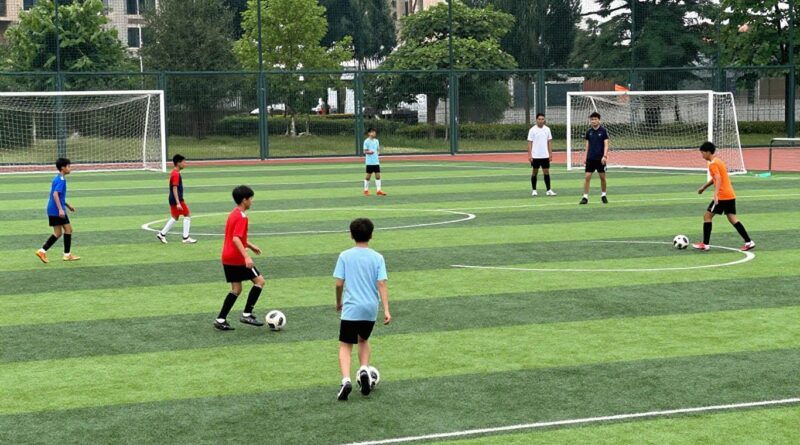
The clearest differences are visible before the first kick. Futsal is a compact, five-a-side game played on a hard court, while outdoor soccer is usually played on a much larger grass or artificial surface. Those settings change how often players touch the ball, how quickly they must react, and how much ground they cover. When we compare futsal vs outdoor soccer, the rules and dimensions provide the useful starting point.
Court and field dimensions
A futsal court is much smaller than a full outdoor pitch, with touchlines and goal lines defining the playing area. Outdoor fields vary in size, but they offer substantially more room between players and between the two goals. That extra space changes the value of a pass: a ball played outdoors may travel across several lines of the team, while a futsal pass often moves only a few metres before the next decision.
The smaller court keeps players close to the action. We cannot rely on distance to escape pressure, so body position and scanning become especially important. Outdoors, players have more time to open their bodies, carry the ball, or move into a larger channel.
Number of players and positions
Futsal is generally played with five players per side, including a goalkeeper. Substitutions can be frequent, and players often rotate through attacking and defensive responsibilities rather than staying in one narrow position. Outdoor soccer commonly uses larger teams, with roles spread across defenders, midfielders, wingers, and forwards.
That difference affects how children understand their role. Futsal gives each player regular involvement, while outdoor soccer teaches us how a player’s position connects with teammates over a much wider area. Neither structure is automatically better; each develops a different view of the game.
Ball size, weight, and bounce
A futsal ball is smaller than a standard outdoor soccer ball and designed to bounce less. Its movement stays closer to the floor, which supports receiving, passing, and controlling the ball in tight spaces. An outdoor ball travels farther and behaves differently when it bounces on grass, artificial turf, or a wet surface.
Players moving between formats need a short adjustment period. The futsal ball may feel heavier and less lively, while the outdoor ball can seem faster over distance. We should encourage players to judge the ball by its actual movement rather than using the same touch automatically in both games.
Match length and game structure
Standard futsal matches are commonly organised into two 20-minute periods, with the clock and competition rules affecting how the game is managed. Outdoor match length varies with age group and competition, and the game usually unfolds over longer stretches of continuous running. Local organisers may apply modified rules, so we should always check the competition instructions.
The structure creates a different rhythm. Futsal offers repeated transitions and frequent moments near goal, whereas outdoor soccer may include longer spells of patient possession or movement without the ball. Players learn to stay engaged in both, even when the ball is not immediately nearby.
How the playing surface changes the game
The surface is not just a background detail. A hard indoor court allows the ball to roll quickly and predictably, while grass can slow it, hold it, or make its bounce less consistent. Weather, footwear, and the quality of the surface also influence confidence. We should help players adapt their technique instead of treating one surface as the correct model for every situation.
Faster passes and quicker reactions indoors
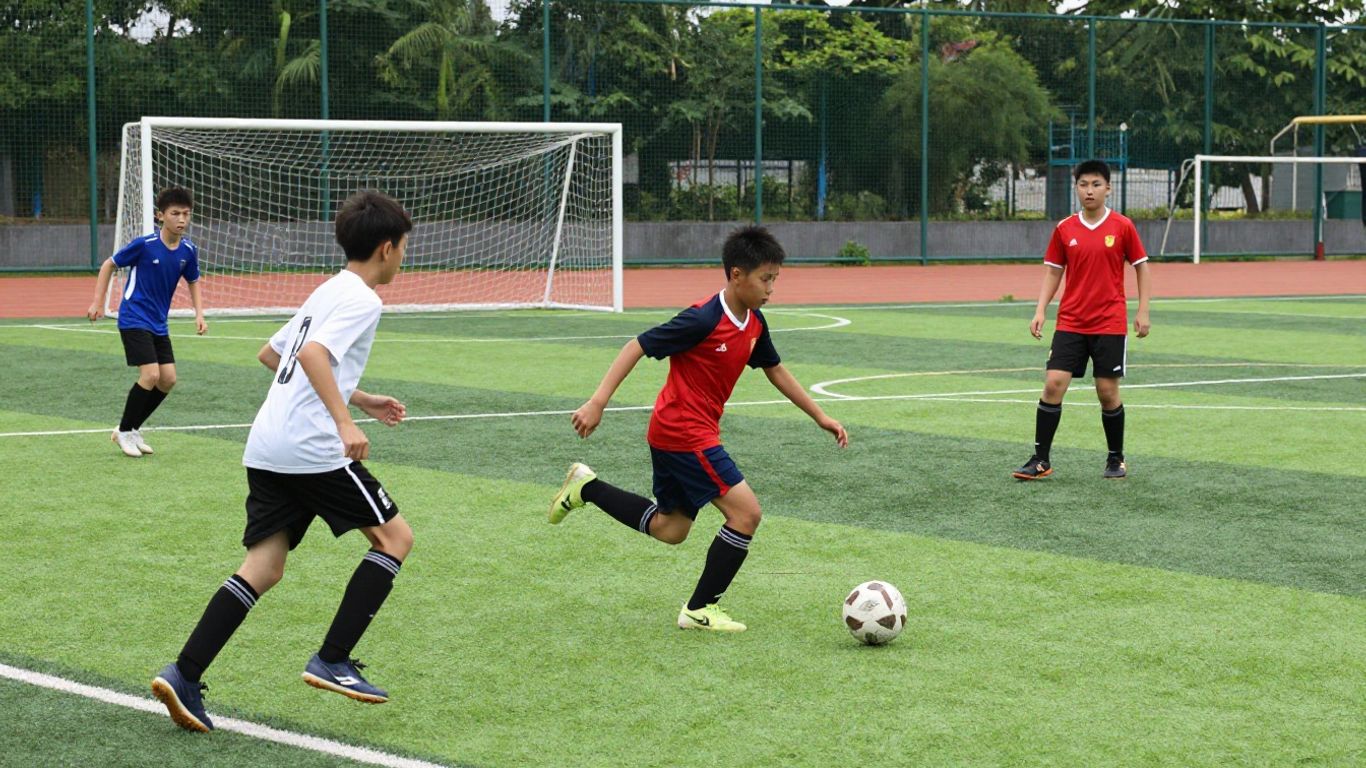
On a good futsal court, a firm pass can reach a teammate quickly and stay close to the ground. Players have less time to receive, scan, and release the ball, particularly when an opponent is pressing from behind. This encourages a soft first touch, clear communication, and movement before the pass is played.
The speed is mental as well as physical. A player may need to decide whether to pass, turn, protect the ball, or use a teammate as a wall pass in a single moment. We can train this without demanding rushed play: the aim is a quick, useful decision rather than speed for its own sake.
Space, running, and positioning outdoors
Outdoor soccer gives players more room to stretch the opposition. A winger can hold width, a midfielder can receive between lines, and a defender may need to cover a large space behind the back line. These movements are harder to see in a small court because the distances are compressed.
With more space comes more responsibility away from the ball. Players must recognise when to support, when to make a forward run, and when to recover. We should praise intelligent positioning even when it does not result in an immediate touch.
Managing traction and ball control
Traction influences every action, from a standing tackle to a change of direction. Indoor shoes are designed for a flat court, while outdoor footwear needs studs or moulded elements suited to the playing surface. Players should also adjust the length and force of their touch when the ball rolls differently.
A useful comparison helps us explain the adjustment. On a fast court, the ball may need a softer touch to keep it within reach; on longer grass, a firmer pass may be needed to carry through resistance. These are small technical changes, but they improve control and reduce frustration.
Adapting when playing futsal outdoors
Futsal can be played in different settings, but taking a court game outdoors requires care. A rough or wet surface can change the ball’s speed, and outdoor space makes the usual short passing options less immediate. Players may need to scan earlier, take a slightly larger first touch, and recognise when a longer pass is now available.
We can keep the spirit of futsal while adapting the execution. Encourage quick support, short combinations, and brave receiving, but allow the player to use the extra space when it genuinely helps the team.
Comparing the skills each format develops
Both games develop football skills, though the emphasis is different. Futsal creates frequent pressure and repeated decisions, while outdoor soccer gives players more opportunities to manage space and timing over distance. Good coaching connects these experiences rather than presenting them as competing pathways. The transfer is strongest when players understand why a technique works, not just where it was learned.
Close control in tight spaces
Futsal puts players near opponents and teammates almost constantly. A player must protect the ball with the body, use the sole or inside of the foot, and keep the next action available. This can make close control feel natural when the player later receives in a crowded part of an outdoor pitch.
Outdoor soccer still demands close control, especially near the sideline, in midfield traffic, or around the penalty area. The difference is that the player may have more time to prepare the touch. We should develop both calm control in space and secure control under immediate pressure.
Passing speed and decision-making
Short passing is central to both formats, but futsal often reduces the time between receiving and releasing. Players learn to check their shoulder, identify a safe angle, and move after passing. These habits can support faster, clearer decisions outdoors, where the next pass may be longer or more difficult to see.
Outdoor soccer adds the challenge of choosing between different distances and directions. A player may switch play, play through midfield, or keep possession with a simple pass. We should teach players to value the best decision, not merely the most ambitious one.
Shooting technique and finishing
Futsal creates frequent shooting opportunities from close and medium range. Players often need to finish before a defender can block the attempt, using accuracy, a quick setup, or a toe-poke when space is limited. The smaller goal and crowded area can make the timing of the shot as important as its power.
Outdoor soccer offers more varied finishing situations. Players may shoot after a long run, meet a cross, finish one-on-one, or strike from outside the penalty area. We should help them adjust their body shape and contact point to the distance, angle, and pressure.
One-on-one defending and pressing
In futsal, a defender may be exposed quickly if a challenge is mistimed. Players practise closing space, staying balanced, showing an opponent away from goal, and recovering after being beaten. Pressing also becomes a shared action because one player’s movement can trigger the next defender.
Outdoor soccer asks defenders to judge larger spaces and cover behind teammates. A player may delay rather than tackle, protecting the centre until support arrives. Learning when to press and when to contain is useful in both games, even though the distances differ.
Fitness demands and physical differences
The two formats can both be demanding, but the workload feels different. Futsal usually involves repeated accelerations, stops, turns, and short recovery periods. Outdoor soccer includes those actions as well, alongside longer runs and more time spent moving across the pitch. Fitness should therefore support the game’s decisions, not sit apart from them.
Short bursts versus sustained running
Futsal players commonly work in short, intense bursts. They sprint to support, recover quickly, press, change direction, and repeat the effort after a substitution or brief pause. Outdoor players may need to maintain movement across a larger area, including longer recovery runs and repeated runs into space.
A player can be fit for one format and still need adjustment in the other. We should build conditioning through age-appropriate games, with the ball involved where possible. That approach keeps the physical work connected to perception and technique.
Agility, acceleration, and balance
Small-sided play rewards the ability to accelerate over a few steps and stop under control. Balance matters when a player receives with an opponent close by or turns away from pressure. Outdoor soccer adds longer acceleration, curved runs, and changes of pace over greater distances.
Good movement begins with body control. We can teach players to lower their centre of gravity, take quick adjustment steps, and avoid reaching or leaning during a turn. Those habits help on courts, grass, and artificial surfaces.
Contact, fatigue, and injury considerations
Contact exists in both formats, although the type and frequency can vary with the competition. Fatigue may affect technique, concentration, and decision-making, so players need sensible rotations, warm-ups, hydration, and recovery. We should follow the rules and guidance of the relevant club or competition rather than treating every match as the same.
Players also need to report pain or unusual symptoms to a parent, coach, or qualified health professional. We can manage training loads thoughtfully, but we should not try to diagnose an injury from the sideline. Safe participation comes before winning a particular session.
How goalkeepers’ demands vary
A futsal goalkeeper usually faces close-range shots, rapid passes across the goal, and frequent decisions about when to leave the area. Reactions and positioning are vital because the ball can arrive quickly from a short distance. The goalkeeper may also be involved in building play with their feet.
Outdoor goalkeepers cover a larger goal and often read crosses, through balls, and long-range shots. They may spend longer periods observing before acting, then need to respond to a sudden breakaway. Training should reflect these different distances and angles.
Which format is better for player development
There is no single answer for every player or every stage. Futsal can provide many touches and repeated decisions, while outdoor soccer teaches players to use space, shape, and longer movements. Development depends on the quality of coaching, the player’s age, the competition level, and how much enjoyment they bring to the activity. We should choose the format that supports the next useful step.
Why futsal helps younger players
A smaller game can give younger players more chances to receive, pass, defend, and shoot. They are close enough to the action to see the consequences of their choices, and the compact court can encourage involvement rather than hiding at the edge of play. This makes futsal a useful environment for practising basic technique under pressure.
We should still keep sessions playful and varied. Young players need freedom to try, make mistakes, and solve problems, not constant instructions from the sideline. The coach’s role is to shape the environment and ask questions that help players notice their options.
How outdoor soccer builds tactical awareness
Outdoor soccer makes team shape more visible. Players learn how width, depth, cover, and compactness change as the ball moves. They also learn that a good decision may involve moving away from the ball to create a lane for someone else.
Those lessons take time because the pitch is large and the situations keep changing. We can use small-sided games first, then gradually add more players and space. This lets children understand tactical ideas without overwhelming them with positions and instructions.
Using both formats throughout the year
Using both games can give players a broader football education. Indoor sessions can focus on receiving, quick support, and combination play, while outdoor sessions can explore switching play, longer passing, and defensive organisation. The formats can complement each other when the coaching language remains consistent.
A simple yearly rhythm may be more useful than treating one format as a permanent replacement for the other. We can adjust the balance around weather, facilities, school commitments, and the player’s current development needs.
Choosing training goals for different positions
Position matters, but it should not limit a young player too early. A defender benefits from futsal’s close control and pressure, while an attacker benefits from outdoor space and varied finishing angles. Midfielders need both quick combinations and the ability to scan across a wide field.
We can use the following broad guide while keeping training flexible:
- Goalkeepers need reaction work, foot skills, and decisions at different distances.
- Defenders need body shape, recovery movement, and composure under pressure.
- Midfielders need scanning, support angles, and control of tempo.
- Attackers need separation, finishing, and movement behind defenders.
These are starting points, not fixed labels. Players should experience different roles so they understand the whole team’s problems.
Equipment, rules, and safety considerations
Small details can make the transition between formats smoother. The right footwear, ball, clothing, and knowledge of restarts all help players focus on the game rather than unfamiliar equipment. We should check local rules because youth competitions may modify standard laws. Preparation also matters when a session moves between a cool indoor venue and a hot outdoor field.
Footwear for courts versus grass
Court shoes should provide grip on a clean, flat indoor surface without marking it. Outdoor boots are selected according to the grass or artificial surface and the competition’s requirements. Players should never assume that outdoor studs are suitable for an indoor court, or that flat court shoes will provide enough traction outdoors.
We should check that footwear fits securely and is in good condition. Shin protection, comfortable clothing, and a properly inflated ball also support safe, confident play. Equipment does not replace technique, but unsuitable equipment can distract a player or affect movement.
Futsal-specific rules to learn
Futsal has rules that may feel unfamiliar to an outdoor player, including kick-ins instead of throw-ins and a different approach to restarts. The goalkeeper’s involvement, accumulated fouls, and timekeeping can also vary by competition. Players do not need to memorise everything at once, but they should know the rules that affect their next action.
Coaches can teach one rule through a game situation rather than a long lecture. Stopping briefly to explain why a restart is taken in a particular way usually makes the lesson easier to remember.
Common mistakes when switching formats
Players often carry habits from one game into the other. A futsal player may keep the ball too close when there is open outdoor space, while an outdoor player may take a touch that is too large on a fast court. Some players also forget to scan earlier because they expect the pitch to provide time.
We can address these habits with clear prompts:
- Check the space before the first touch.
- Adjust the touch to the surface and speed of the ball.
- Move after passing rather than watching the ball.
- Defend the most dangerous space before chasing the player.
The point is not to erase a player’s natural style. It is to help them choose the right response for the setting.
Preparing for indoor and outdoor conditions
Before an indoor session, players should know the footwear rule, court markings, and any venue requirements. Before an outdoor match, they should consider the weather, surface, sun protection, and suitable layers. A water bottle and enough time for a calm warm-up are practical parts of preparation.
We should also create a clear arrival routine. Checking laces, shin guards, clothing, and the playing surface takes only a moment, yet it helps players begin with attention rather than rushing straight into the first drill.
How to choose between futsal and outdoor soccer
The best choice depends on what the player enjoys and what they need to practise next. Futsal is not simply outdoor soccer moved inside, and outdoor soccer is not merely a slower version of futsal. Each setting offers useful challenges. We can make a sound choice by looking at the player, the coaching environment, and access to regular games.
Pick futsal for fast-paced technical play
Futsal may suit players who enjoy frequent touches, quick combinations, and constant involvement. The smaller court asks them to receive under pressure and make decisions before the next challenge arrives. It can be particularly useful when our training goal is close control, support play, or quick transitions.
Players should still be allowed to develop at their own pace. The intensity can be exciting, but a good session includes moments to recover, reflect, and try the skill again.
Choose outdoor soccer for space and endurance
Outdoor soccer may suit players who enjoy running into space, longer attacks, and the wider tactical picture. It offers room to practise switches of play, overlapping runs, defensive cover, and sustained movement. Players can learn how a team changes shape as the ball travels from one side of the field to the other.
This format also gives children the chance to experience different positions in a larger team. That wider view can help them understand why movement away from the ball matters.
Consider age, skill level, and access
A player’s age and confidence should guide the choice. Younger players often benefit from smaller games and simple decisions, while older or more experienced players may be ready for the physical and tactical demands of a full outdoor format. Access matters too: the best programme is one the player can attend consistently with supportive coaching.
We should ask practical questions before committing. Is the environment welcoming? Are sessions suitable for the player’s level? Can the family manage the travel and schedule? Enjoyment and regular participation are strong foundations for progress.
Combine both games for balanced development
When possible, combining formats gives players a chance to practise both tight-space technique and wide-space awareness. A futsal session can sharpen the quality of a player’s touch, while an outdoor match can teach when to carry, switch, stretch, or recover. The benefits become clearer when coaches help players connect one experience to the other.
For most developing players, we do not need to choose one game forever. We can use the available season, facilities, and training goals to create a balanced path that keeps football enjoyable and challenging.
Frequently Asked Questions
Is futsal harder than outdoor soccer?
Neither is simply harder. Futsal is often more demanding for quick reactions and close control, while outdoor soccer can demand more sustained running, long-distance movement, and awareness of larger spaces.
Can futsal make us better outdoor soccer players?
It can support outdoor development by giving players frequent practice with receiving, passing, turning, pressing, and making decisions under pressure. The transfer is strongest when players also learn how to apply those skills in larger spaces.
Is futsal always played indoors?
Futsal is commonly played indoors on a hard court, but the location can vary. The important features are the court-style playing area, five-a-side structure, low-bounce ball, and futsal rules used by the competition.
What ball is used in futsal?
Futsal uses a smaller ball with less bounce than a standard outdoor soccer ball. Players should use the ball specified by their club or competition, as size and construction can vary by age group.
Can outdoor soccer boots be worn for futsal?
Usually not on an indoor court. Players generally need non-marking court footwear, while outdoor boots are chosen for grass or artificial surfaces. The venue or competition should always have the final say.
Which format is best for young players?
A suitable small-sided format is often helpful because it gives young players more involvement and repeated decisions. The best option also depends on coaching quality, the child’s enjoyment, safety, and regular access to training.
Should players specialise in one format?
Young players generally benefit from experiencing both formats. Futsal can build close control and quick decisions, while outdoor soccer develops wider movement and tactical awareness, so combining them can create a more adaptable player.